
Ethan lived in Austin Texas. He had just started his first job and received four card offers in one week. One promised 5 percent cashback. One promised 60000 bonus points. One had no fee and one had a USD 95 fee. He searched for How to Choose a Credit Card in 2026 and found only rankings.
He then built a simple test. He listed his spending. He noted the fee and the rate and the interest for each card. The best card for him was not the top ranked card. This guide follows his method for How to Choose a Credit Card in 2026.
How to Choose a Credit Card in 2026: Quick Answer
Start with your own spending and not with the card list. Find your two biggest categories. Pick the card type that pays the most in those categories. Check the fee against the rewards you will earn. Check the interest rate only if you might carry a balance.
Pay the full statement every month. Interest of 36 to 45 percent a year in India erases rewards. So does 21 percent in the USA. That is the core of How to Choose a Credit Card in 2026. The rest is detail.
How We Built This Guide
We used Indian fee and reward data from a comparison updated on 7 October 2026. We used the Federal Reserve average APR of about 21 percent for the USA. That is as of February 2026. We used LendingTree data on average balances. We added approval rules from issuer sites.
Figures differ by country and issuer and card variant. Treat them as a map. Use How to Choose a Credit Card in 2026 as a method. Plug in current offers. Confirm terms before you apply.
Know the Seven Card Types
Cards fall into seven types. Cashback cards pay statement credit. Points cards pay rewards you redeem. Travel cards add lounges and low forex markup. Lifetime free cards cost nothing. Secured cards build history. Balance transfer cards cut interest on debt. Premium cards add concierge perks.
How to Choose a Credit Card in 2026: Seven Card Types
| Card type | What it does best | Who should pick it |
|---|---|---|
| Cashback | Pays a share of spend back as statement credit | Most people; simple value |
| Rewards points | Points redeemed for flights or hotels or vouchers | People who redeem at good rates |
| Travel | Lounge access and low or zero forex markup | Frequent flyers |
| Lifetime free or no annual fee | Zero cost with modest rewards | First card or low spenders |
| Secured | Backed by a fixed deposit; builds credit history | Students and thin files |
| Balance transfer or 0% intro (USA and UK) | Low or zero interest on moved debt for a period | People repaying existing card debt |
| Premium | Concierge and golf and high lounge limits | Very high spenders only |
Most people need only a cashback card and maybe a travel card. How to Choose a Credit Card in 2026 starts there. Premium cards suit very high spenders. The type decides most of How to Choose a Credit Card in 2026. Pick the type before the brand.
Map Your Spending First
Pull three months of bank and card statements. Sort spends into groceries and dining and online shopping and fuel and travel and bills. Find the two biggest. A card that pays 10 percent on groceries is useless if you rarely buy groceries.
Note the monthly total in each category. Compare it with the reward cap on each card. A ₹1200 monthly cap at 10 percent covers ₹12000 of spend. Spending above the cap earns the base rate. How to Choose a Credit Card in 2026 depends on that cap. Mapping is step one of How to Choose a Credit Card in 2026.
Compare the Fees
Fees come in six forms. Joining and yearly fees are visible. Interest and forex markup and late fees and cash withdrawal fees are hidden. The hidden fees cost more than the visible ones for most users.
How to Choose a Credit Card in 2026: Fees to Compare
| Fee | Typical range | What to check |
|---|---|---|
| Joining fee | Zero to ₹5000 (USD 0 to 695) | Often waived on a spend target |
| Yearly fee | Zero to ₹5000 (USD 0 to 695) | Spend based waiver and real value |
| Interest on unpaid balance | India 36% to 45% a year; USA about 21% average (Fed February 2026) | Pay in full to avoid it entirely |
| Foreign currency markup | About 2% to 3.5% plus GST in India; 0% to 3% in USA | Zero markup for travel |
| Late payment fee | ₹500 to ₹1300 by slab in India; up to about USD 40 in USA | Autopay the full statement |
| Cash withdrawal | 2.5% plus interest from day one | Never withdraw cash |
Many yearly fees are waived on a spend target. Check the target against your mapped spend. Interest is the biggest fee of all. How to Choose a Credit Card in 2026 treats it as fee number one. How to Choose a Credit Card in 2026 means reading the full fee schedule. Skip the brochure.
Do the Fee Maths
Multiply yearly spend in the top category by the reward rate. Apply the cap. Subtract the fee. The result is net value. Do this for each shortlisted card. The table shows five worked examples.
How to Choose a Credit Card in 2026: Fee Maths Examples
| Example | Yearly spend | Rate and cap | Reward earned | Fee | Net value |
|---|---|---|---|---|---|
| Online shopper | ₹4.8 lakh online | 5% capped at ₹4000 a month | ₹24000 | ₹999 | ₹23001 |
| Grocery household | ₹1.44 lakh on groceries and dining | 10% capped at ₹1200 a month | ₹14400 | ₹999 (waived at ₹2 lakh total) | ₹13401 or ₹14400 |
| Light user | ₹1.2 lakh mixed | 1% flat | ₹1200 | ₹2500 | Minus ₹1300 |
| Frequent flyer | ₹3 lakh on travel | About 4% | ₹12000 | ₹4999 | ₹7001 |
| Carried balance | ₹1 lakh unpaid for a year | 3.5% a month interest | Any rewards | About ₹42000 interest | Deeply negative |
The online shopper nets ₹23001 on a ₹999 card. The light user loses ₹1300 on a ₹2500 card. The carried balance example loses about ₹42000 to interest. The maths is the heart of How to Choose a Credit Card in 2026.
Understand Interest Before You Apply
Interest applies only when you do not pay the full statement. In India it runs about 3 to 3.75 percent a month. That is 36 to 45 percent a year. In the USA the Federal Reserve put the average APR at about 21 percent. That was February 2026. LendingTree found the average unpaid balance was USD 7886 in Q3 2025.
That balance costs about USD 138 a month in interest. One carried balance wipes out years of rewards. If you might carry a balance pick the lowest rate card. Rewards come second. How to Choose a Credit Card in 2026 for borrowers means rate first. That order matters in How to Choose a Credit Card in 2026.
Check Your Approval Odds
Issuers check credit score and income and utilisation and recent enquiries. A score of 750 or above in India gets most cards. A score of 670 or above in the USA opens good cards. Entry cards in India need about ₹25000 a month in income.
How to Choose a Credit Card in 2026: Approval Factors
| Factor | What issuers look for | Quick fix |
|---|---|---|
| Credit score | 750 or above in India; 670 plus in USA for good cards | Pay every bill on time for six months |
| Income | ₹25000 a month and up for entry cards | Apply for the tier that matches your income |
| Utilisation | Below 30% of total limit | Pay mid-cycle to keep the ratio low |
| Recent enquiries | Few hard enquiries in six months | Apply for one card at a time |
| History length | Longer is better | Keep the oldest card open |
Apply for one card at a time. Each application is a hard enquiry. A rejection also sits on the file. Match the card tier to your income. Approval odds shape How to Choose a Credit Card in 2026 for new applicants.
Top 5 Profiles and the Right Card Type
How to Choose a Credit Card in 2026 depends on who you are. These five profiles cover most readers. Each maps to a card type and a reason.
How to Choose a Credit Card in 2026: Top 5 Profiles
| Your profile | Pick this type | Why |
|---|---|---|
| First card or student | Secured or lifetime free | Builds history at zero cost |
| Pays in full and spends online | Cashback with a high cap | Direct statement credit beats points |
| Travels abroad twice a year or more | Zero forex markup travel card | Markup savings exceed most rewards |
| Carries a balance some months | Lowest interest card or a balance transfer card | Interest matters more than rewards |
| Spends above ₹5 lakh or USD 20000 a year | Premium card with spend waiver | Perks and waivers clear the fee |
1. First Card or Student
Pick a secured card or a lifetime free card. A secured card sits against a fixed deposit and approves thin files. A lifetime free card costs nothing. Use it for small spends and pay in full. Build twelve months of history.
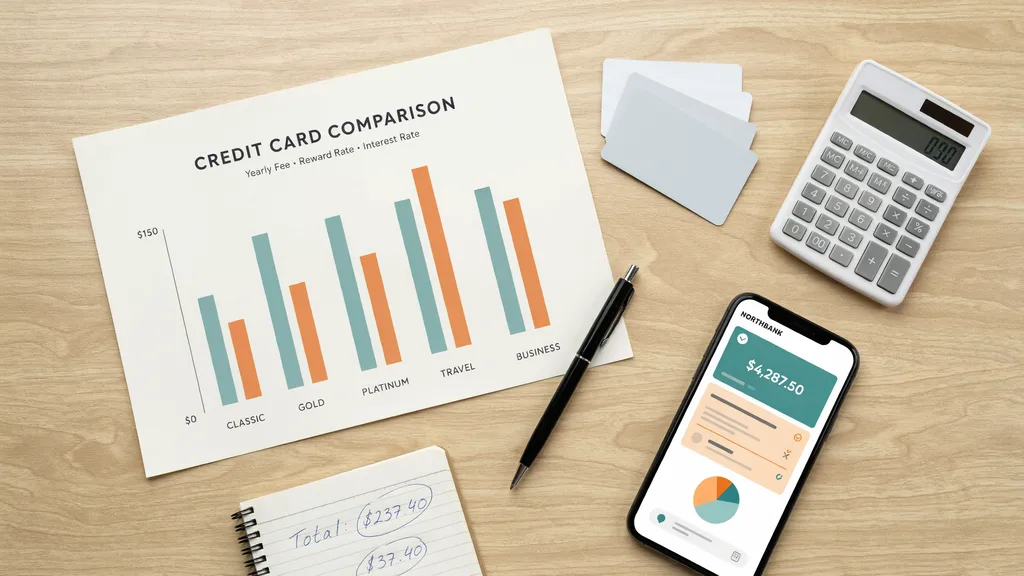
Upgrade after a year. That is the starter path in How to Choose a Credit Card in 2026.
2. Pays in Full and Spends Online
Pick a cashback card with a high cap. A 5 percent online rate with a ₹4000 monthly cap suits spends up to ₹80000. That is per month. Statement credit is simpler than points. Check the fee waiver target. How to Choose a Credit Card in 2026 for online spenders ends there.
Cashback beats points for most people. That is the everyday pick in How to Choose a Credit Card in 2026.
3. Travels Abroad Twice a Year or More
Pick a zero forex markup card. A 3.5 percent markup on ₹2 lakh of holiday spend is ₹7000. Zero markup saves that outright. Lounge access adds value on long trips. Pay the fee only if travel spend clears it.
Carry a backup card abroad. That is the traveller pick in How to Choose a Credit Card in 2026.
4. Carries a Balance Some Months
Pick the lowest interest card available. In the USA a 0 percent intro balance transfer card can pause interest. In India low rate cards are rare so a personal loan may cost less. Ignore rewards until the balance is cleared.
Interest beats rewards every time. That is the borrower pick in How to Choose a Credit Card in 2026.
5. Spends Above ₹5 Lakh or USD 20000 a Year
Pick a premium card with a spend based waiver. Lounge limits and concierge and milestone bonuses clear the fee at this level. Value the perks at what you would pay for them. Drop the card if the value falls.
Premium works only at high spend. That is the high spender pick in How to Choose a Credit Card in 2026.
For wider context see the World Economic Forum section on financial and monetary systems. The OECD finance page offers comparative data on consumer credit. Both add background to How to Choose a Credit Card in 2026.
5 Costly Mistakes Applicants Make
Mistake 1: Chasing the Sign-up Bonus
A 60000 point bonus with a USD 95 fee needs a reachable spend target. Never overspend for a bonus.
Mistake 2: Ignoring the Cap
A 10 percent rate with a small cap can pay less than 2 percent uncapped. That happens at high spend. Check the cap in How to Choose a Credit Card in 2026.
Mistake 3: Applying for Several Cards at Once
Each application is a hard enquiry. Several at once lowers your score and raises rejection odds. Apply for one.
Mistake 4: Paying Only the Minimum
Interest of 21 to 45 percent a year destroys rewards. Pay the full statement by autopay.
Mistake 5: Keeping a Fee Card You No Longer Use
A ₹5000 fee on a card you rarely swipe is pure loss. Downgrade or close it. Review every renewal as part of How to Choose a Credit Card in 2026.
Action Plan: How to Choose a Credit Card in 2026
Step 1: Map Three Months of Spending
Sort spends by category. Find the two largest. Note monthly totals.
Step 2: Pick the Card Type
Match the type to your profile. Cashback for most. Zero markup for travellers. Low rate for borrowers.
Step 3: Shortlist Three Cards and Do the Maths
Multiply spend by rate. Apply the cap. Subtract the fee. Keep the best net value.
Step 4: Check Approval Odds
Confirm score and income requirements. Apply for one card. Wait for the result.
Step 5: Set Autopay and Review Yearly
Autopay the full statement. Review fees and rates each year. That completes your How to Choose a Credit Card in 2026 plan.
Also read: Best Credit Cards in India 2026: Cashback Travel and Lifetime Free
Frequently Asked Questions
Q1: What is the first thing to check when choosing a credit card?
Check your own spending before any card feature. Pull three months of statements. Sort spends by category and find the two biggest. A card that pays 10 percent on groceries is useless if you rarely buy groceries. Then match the card type to those categories. Cashback suits most people. Zero forex markup suits travellers. Low interest suits anyone who might carry a balance. How to Choose a Credit Card in 2026 starts with the spending map. The fee and the rate and the cap come next. Approval odds come last. Most people skip the first step and pick the top ranked card. That card is often wrong for them.
Q2: Is an annual fee card worth it?
Only if the rewards clearly exceed the fee. Multiply your yearly spend in the top category by the reward rate. Apply the monthly cap. Subtract the fee. A ₹999 card earning ₹24000 a year is worth it. A ₹2500 card earning ₹1200 is not. Many fee cards waive the fee at a spend target. Check whether you will reach it. Premium cards suit only spenders above ₹5 lakh or USD 20000 a year. How to Choose a Credit Card in 2026 includes this fee maths for every card. Review the sum at each renewal. Downgrade to a free variant if the number turns negative.
Q3: Cashback or reward points?
Cashback for most people. It lands as statement credit with no expiry and no redemption rate to track. Points suit people who redeem for flights or hotels at good rates. Points can expire and lose value when the issuer changes the ratio. A 5 percent cashback card is easy to value. A 4X points card depends on what a point is worth. How to Choose a Credit Card in 2026 favours cashback unless you travel often. Frequent flyers who transfer points to airlines can beat cashback. Everyone else should take the simple route. Check the cap on cashback cards. Check the expiry rule on points cards. Redeem points every few months.
Q4: How much interest will I pay if I carry a balance?
In India most cards charge about 3 to 3.75 percent a month. That is 36 to 45 percent a year. In the USA the Federal Reserve put the average APR at about 21 percent. That was February 2026. LendingTree found the average unpaid balance was USD 7886 in Q3 2025. That balance costs about USD 138 a month. A ₹1 lakh balance in India costs about ₹3500 a month. One carried balance erases years of cashback. How to Choose a Credit Card in 2026 puts interest ahead of rewards for borrowers. Pick the lowest rate card or a balance transfer card. Pay in full every month if you can.
Q5: What credit score do I need for a good card?
In India a score of 750 or above opens most cards. In the USA a score of 670 or above opens good cards. A 740 plus score opens the best. Entry cards in India need about ₹25000 a month in income. Keep utilisation below 30 percent of your total limit. Avoid several applications in six months. Pay every bill on time. A secured card against a fixed deposit builds a score from nothing. How to Choose a Credit Card in 2026 means matching the tier to your score. Check your score free on a bureau site first. Fix errors before you apply. Apply for one card and wait for the result.
Q6: How many cards should I apply for?
One at a time. Each application creates a hard enquiry on your file. Several enquiries in a short period lower your score and raise rejection odds. A rejection also sits on the file. Wait for the decision before the next application. Two or three cards in total is enough for most people. One cashback card for your top category. One zero markup card if you travel. One free backup card. How to Choose a Credit Card in 2026 is about the right card. It is not about the most cards. Keep the oldest card open for history length. Close fee cards you no longer use after checking the score effect. Review the set each year.
Q7: Should I choose a card for the sign-up bonus?
Only if you would spend the target amount anyway. A 60000 point bonus often needs USD 4000 of spend in three months. Overspending to hit the target costs more than the bonus. Value the points at a realistic rate. Check the fee in year one and year two. Many bonuses come with a fee that returns in year two. How to Choose a Credit Card in 2026 treats the bonus as an extra. The ongoing reward rate and fee matter more. Avoid opening cards only for bonuses because enquiries add up. Keep the card for a year to protect your score. Compare the bonus with the yearly net value.
Q8: What is a zero forex markup card?
A card that charges no extra percentage on foreign currency spends. Most cards add about 2 to 3.5 percent plus GST in India. US cards add up to 3 percent. On ₹2 lakh of holiday spend that is up to ₹7000. A zero markup card saves that outright. Some travel cards also add lounge access and travel insurance. Pay in local currency at the terminal and decline dynamic currency conversion. How to Choose a Credit Card in 2026 for travellers starts with markup. Points come second. Carry one zero markup card and one backup. Inform the issuer of travel dates. Check the ATM withdrawal fee abroad too.
Q9: Can I get a credit card with no income proof?
Yes through a secured card. The bank issues a card against a fixed deposit and the limit matches the deposit. Students and freelancers and new arrivals use this route. Some banks also issue cards against existing savings relationships. Pay in full for a year and the bank may offer an unsecured card. Lifetime free cards sometimes approve lower incomes. How to Choose a Credit Card in 2026 without income proof means starting small. Keep utilisation low. Never miss a payment. Ask the bank to report the card to the credit bureaus. That builds the score you need for better cards later. Avoid add-on cards in someone else’s name as the only history.
Q10: When should I switch or cancel a card?
Review every renewal and after any rate or fee change. Switch if a rival card pays more in your top category after fees. Cancel a fee card you rarely use. Keep the oldest free card open because history length helps your score. Check the effect on utilisation before closing because the total limit falls. Redeem all points before cancelling. Clear the balance and get written confirmation of closure. How to Choose a Credit Card in 2026 is a yearly exercise. It is not a one time pick. Issuers change caps and rates without much notice. Read the emails they send. A short yearly review keeps the set sharp.
Conclusion
How to Choose a Credit Card in 2026 is a method and not a ranking. Map your spending. Pick the type. Do the fee maths with the cap. Check interest only if you might carry a balance. Check approval odds and apply for one card.
Pay the full statement every month by autopay. Review the card each year. A card chosen this way earns real value instead of costing interest. That is How to Choose a Credit Card in 2026 in five steps.
This guide on How to Choose a Credit Card in 2026 is general information. It is not financial advice. Fees and rates and rules change. Confirm all terms on the issuer’s site before you apply.