
Daniel lived in Melbourne. He had bought travel insurance for five years without reading a page. Then his bag was lost in Bangkok. His claim paid USD 300 against a USD 900 loss. The policy had a per item cap he never knew existed. He searched for Travel Insurance Explained 2026 and found only sales pages.
He then read his policy with a notebook. He listed every limit and sub-limit and exclusion. He wrote down the claim steps. The next trip went differently. This guide follows his method for Travel Insurance Explained 2026.
Travel Insurance Explained 2026: Quick Answer
A travel policy is a bundle of separate covers. Each has its own limit and often a sub-limit and a deductible. Medical cover is the big one at USD 50000 to USD 1 million. Baggage and cancellation and delay covers are small at USD 100 to USD 10000.
Claims fail on undeclared conditions and missing documents and excluded activities. Read the schedule page and not the brochure. Call the assistance line before treatment. That is the heart of Travel Insurance Explained 2026.
How We Built This Guide
We used policy wordings from major Indian and international insurers. We used a June 2026 plan comparison for premium and limit examples. We added Schengen visa rules and claim timelines from insurer sites. Figures are typical ranges and not quotes.
Every policy differs. Your schedule page overrides anything written here. Use this as a map for Travel Insurance Explained 2026. Then read your own wording with the map beside it.
Seven Terms in Every Policy
Seven terms appear in every policy. The sum insured is the top limit. The deductible is your share per claim. Sub-limits cap single items. Waiting periods delay some covers. Pre-existing conditions are usually excluded. Trip duration and geographic scope set the boundaries.
Travel Insurance Explained 2026: Seven Terms in Every Policy
| Policy part | What it means | Typical figure |
|---|---|---|
| Sum insured or medical limit | Maximum the insurer pays for medical costs abroad | USD 50000 to USD 1 million |
| Deductible or excess | Amount you pay on each claim before the insurer pays | Zero to USD 100 per claim |
| Sub-limit | Separate cap inside the main limit for one item | Baggage USD 500 to 1500; dental USD 300 to 500 |
| Waiting period | Days after purchase before a cover starts | Usually none for medical; 24 to 72 hours for some delay covers |
| Pre-existing condition | Illness you had before buying the policy | Excluded or emergency only |
| Trip duration | Maximum days per trip the policy covers | 30 to 180 days single trip; 30 to 45 per trip on annual |
| Geographic scope | Countries where cover applies | Worldwide; worldwide excluding USA and Canada; Schengen; Asia |
Daniel’s lost bag hit a sub-limit. His USD 1500 baggage cover had a USD 300 per item cap. Those seven terms explain most claim surprises. Learn them first in Travel Insurance Explained 2026.
The Ten Covers and Their Limits
A standard policy carries about ten covers. Emergency medical and evacuation protect against the biggest bills. Cancellation and curtailment protect bookings. Baggage and delay and passport covers pay small fixed amounts. Liability covers damage you cause. Adventure sports are an add-on.
Travel Insurance Explained 2026: Ten Covers and Typical Limits
| Cover | What it pays for | Common limit |
|---|---|---|
| Emergency medical | Hospital and doctor and medicine abroad | USD 50000 to USD 1 million |
| Evacuation and repatriation | Air ambulance and return home or return of remains | USD 25000 to USD 500000 or within medical limit |
| Trip cancellation | Non-refundable bookings if you cancel for a listed reason | USD 500 to USD 10000 |
| Trip curtailment | Unused bookings if you cut the trip short | USD 500 to USD 5000 |
| Baggage loss | Checked bags lost by the airline | USD 500 to USD 1500 with per item caps |
| Baggage delay | Essentials bought during a delay of 12 hours or more | USD 100 to USD 500 |
| Flight delay | Fixed payout after a set delay | USD 50 to USD 500 after 6 to 12 hours |
| Passport loss | Cost of an emergency replacement | USD 200 to USD 500 |
| Personal liability | Injury or damage you cause to others | USD 100000 to USD 1 million |
| Adventure sports | Injury during listed activities | Add-on only |
Medical cover decides the premium and the protection. Everything else is small. Buy the medical limit for the destination. Treat the rest as useful extras in Travel Insurance Explained 2026.
Medical Cover and Evacuation
Emergency medical pays hospital and doctor and medicine costs abroad. Limits run from USD 50000 for Asia to USD 1 million for the USA. Schengen visas require EUR 30000 as a minimum. Evacuation pays for an air ambulance to a better hospital or home. It can sit inside the medical limit or carry its own cap.
Dental is usually a small sub-limit for emergency pain relief only. Outpatient visits may need the deductible paid first. Maternity and routine check-ups are excluded. Mental health cover varies widely. Travel Insurance Explained 2026 starts with these rules. Medical rules form the core of Travel Insurance Explained 2026.
Deductibles and Sub-limits
A deductible is the amount you pay on each claim. Some cheap plans carry USD 50 to USD 100. A USD 100 deductible on a USD 250 clinic visit leaves you paying 40 percent. Zero deductible plans cost a little more and pay in full.
Sub-limits cap single items inside a cover. Baggage covers often cap each item at USD 100 to USD 300. Electronics may be excluded or capped lower. Jewellery and cash are usually excluded. Travel Insurance Explained 2026 means reading every cap. Those caps shape payouts in Travel Insurance Explained 2026.
Common Exclusions
Most failed claims trace back to six exclusions. Undeclared pre-existing conditions lead the list. Alcohol related injuries are excluded. Adventure sports need a rider. Travel against government advice is excluded. Late claims and missing documents fail. Unattended baggage is not covered.
Travel Insurance Explained 2026: Common Exclusions
| Common exclusion | Why claims fail | How to avoid it |
|---|---|---|
| Undeclared pre-existing condition | Insurer finds prior treatment records | Declare everything at purchase |
| Alcohol or drug related injury | Policy wording excludes it | Stay within limits |
| Adventure sports without rider | Skiing and scuba and trekking are excluded by default | Buy the rider |
| Travel against government advice | War or disaster zones | Check advisories before booking |
| Late claim or missing documents | Claim windows run 30 to 90 days | File fast with every paper |
| Unattended baggage | Theft from an unattended bag | Keep valuables on you |
Declare every condition at purchase. Buy the sports rider if you ski or dive or trek. Keep valuables on you. File claims fast with every paper. Those habits prevent most refusals in Travel Insurance Explained 2026.
The Claim Process
Call the assistance line before treatment where possible. Many insurers arrange cashless care at network hospitals abroad. For reimbursement keep every bill and report. File police reports within 24 hours for theft. Get an airline property irregularity report for lost bags.
Travel Insurance Explained 2026: Claim Process
| Step | When | What to do |
|---|---|---|
| Call the assistance line | Before treatment where possible | Get a claim number and hospital guidance |
| Use cashless care | At network hospitals | Insurer pays the hospital directly |
| Collect documents | During the event | Bills and reports and police report and airline report |
| File the claim | Within the policy window after return | Online form with scans |
| Follow up | Every 7 to 10 days | Email with the claim number |
| Escalate | After 30 days without payment | Grievance cell then the regulator or ombudsman |
Submit the claim within the window after return. Windows run 30 to 90 days. Travel Insurance Explained 2026 rewards speed here. Follow up by email with the claim number. Escalate to the grievance cell and then the regulator if payment stalls. The process completes Travel Insurance Explained 2026.
Top 5 Cover Shapes by Traveller
Travel Insurance Explained 2026 ends with the shape that fits you. These five shapes cover most travellers. Each sets a medical limit and the extras that matter.
Travel Insurance Explained 2026: Top 5 Cover Shapes
| Traveller | Cover shape | Why |
|---|---|---|
| Short holiday in Asia | USD 50000 medical and zero deductible | Low cost and private hospital bills covered |
| USA or Canada visit | USD 250000 to USD 1 million medical | Highest hospital costs in the world |
| Schengen visa trip | EUR 30000 minimum; USD 50000 advised | Visa rule plus real hospital costs |
| Parents above 60 | Emergency pre-existing cover and higher limits | Age raises both risk and cost |
| Frequent flyer | Annual multi-trip with 30 to 45 day per trip limit | One premium for the year |
1. Short Holiday in Asia
Pick USD 50000 of medical cover with zero deductible. Private hospitals in Singapore and Bangkok charge Western rates. A 30 day policy at age 30 costs about ₹1250 by one June 2026 figure. Add baggage delay cover if you connect through busy hubs.
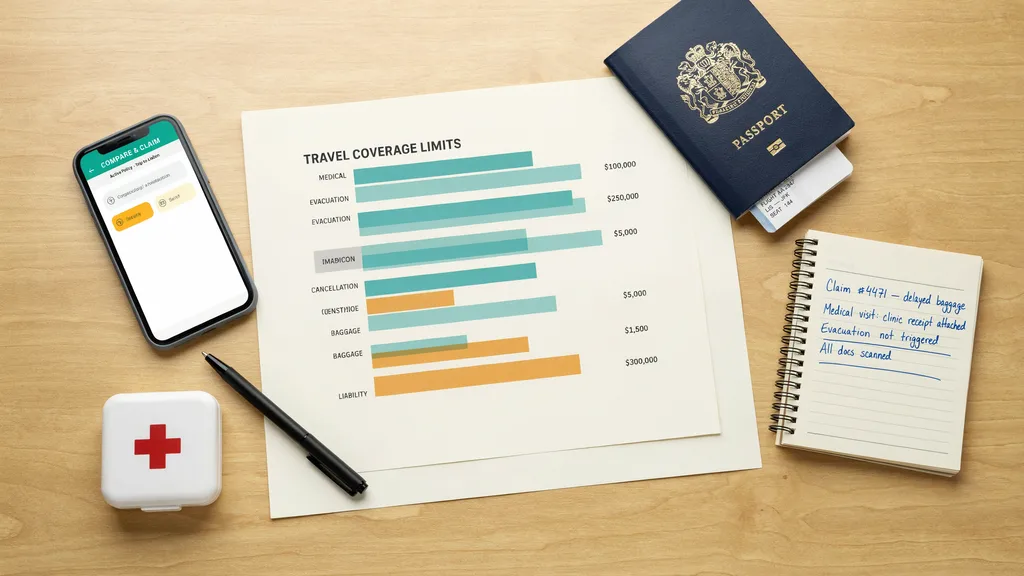
Keep the policy on your phone. That is the Asia shape in Travel Insurance Explained 2026.
2. USA or Canada Visit
Pick USD 250000 to USD 1 million of medical cover. US emergency room visits pass USD 5000 and admissions pass USD 50000. A 30 day worldwide policy at age 30 costs about ₹3000 to ₹3100. Check evacuation cover because air ambulance bills are high.
Zero deductible matters more here. Travel Insurance Explained 2026 for the USA is about the medical line. That is the North America shape in Travel Insurance Explained 2026.
3. Schengen Visa Trip
The visa needs EUR 30000 of medical cover across all Schengen states. Buy USD 50000 or more because EUR 30000 runs out fast in a German hospital. Ask for the visa certificate at purchase. Some consulates prefer zero deductible plans.
Match the policy dates to the itinerary exactly. Travel Insurance Explained 2026 for visas is a paperwork test. That is the Europe shape in Travel Insurance Explained 2026.
4. Parents Above 60
Pick a plan with emergency pre-existing cover and a higher medical limit. Seniors pay two to four times the age 30 premium and may need medical checks. Declare every condition. Carry prescriptions and recent reports.
Read the definition of emergency in the wording. That is the senior shape in Travel Insurance Explained 2026.
5. Frequent Flyer
Pick an annual multi-trip plan with a 30 to 45 day per trip limit. Prices run ₹6000 to ₹15000 by age and limits. Two trips a year already beat single trip pricing. Check whether the USA is included.
Renew before the first trip of the year. That is the frequent flyer shape in Travel Insurance Explained 2026.
For wider context see the World Economic Forum section on travel and tourism. The OECD tourism page offers comparative data on international travel. Both add background to Travel Insurance Explained 2026.
5 Costly Mistakes Travellers Make
Mistake 1: Reading the Brochure Instead of the Schedule
The schedule page lists real limits and deductibles. The brochure lists headlines. Read the schedule for Travel Insurance Explained 2026.
Mistake 2: Skipping the Assistance Call
Treatment without a call can turn cashless care into a reimbursement fight. Call first.
Mistake 3: Assuming Electronics Are Covered
Laptops and phones are often excluded or capped at USD 100 to USD 300. Check the sub-limit.
Mistake 4: Hiding a Condition
Insurers check prior records at claim time. Declare everything in Travel Insurance Explained 2026.
Mistake 5: Filing Late
Claim windows run 30 to 90 days. File within a week of return with every document.
Action Plan: Using Travel Insurance Explained 2026
Step 1: Read the Schedule Page
Note the medical limit and deductible and every sub-limit. Note the trip duration and scope.
Step 2: Match the Medical Limit to the Destination
USD 50000 for Asia. USD 250000 or more for the USA. USD 50000 or more for Europe.
Step 3: Declare and Add Riders
Declare conditions. Add adventure sports or electronics cover if needed.
Step 4: Save the Assistance Number
Store the policy PDF and helpline on your phone. Share with a companion.
Step 5: Claim Fast and Follow Up
Call before treatment. Collect every paper. File within a week of return. That completes your Travel Insurance Explained 2026 plan.
Also read: Best Travel Insurance for Indians Going Abroad 2026: Plans Compared
Frequently Asked Questions
Q1: What does travel insurance actually cover?
A standard policy bundles about ten covers. Emergency medical pays hospital and doctor costs abroad. Limits run USD 50000 to USD 1 million. Evacuation pays for an air ambulance and repatriation. Trip cancellation and curtailment refund non-refundable bookings for listed reasons. Baggage loss and delay pay small fixed amounts with per item caps. Flight delay and passport loss pay fixed sums. Personal liability covers damage you cause. Adventure sports are an add-on. Travel Insurance Explained 2026 means knowing each cover has its own limit. Medical cover is the one that matters most. The rest are useful extras. Read the schedule page for the real figures. Brochures show headlines only.
Q2: What is a deductible in travel insurance?
A deductible is the amount you pay on each claim before the insurer pays. Some cheap plans carry USD 50 to USD 100 per claim. A USD 100 deductible on a USD 250 clinic visit leaves you paying 40 percent. Zero deductible plans cost a little more and pay in full. Deductibles can differ by cover type. Medical and baggage may have separate figures. Some Schengen consulates prefer zero deductible policies. Travel Insurance Explained 2026 puts the deductible on the first page of your notes. Check it in the schedule and not the brochure. Ask the insurer before you buy. Small premium savings can cost more at claim time. Pick zero where you can.
Q3: Why was my baggage claim paid less than my loss?
Baggage covers carry sub-limits. The total might be USD 1500. Each item is capped at USD 100 to USD 300. Electronics are often excluded or capped lower. Jewellery and cash are usually excluded. Unattended bags are not covered. The insurer also applies depreciation to used items. Receipts raise the payout. Travel Insurance Explained 2026 warns that baggage cover is a small fixed benefit. It is not full replacement. Keep valuables and electronics in your carry-on. Photograph contents before you fly. Get the airline property irregularity report at the counter. File within the window with receipts. Expect a partial payout and plan for it.
Q4: Does travel insurance cover pre-existing conditions?
Usually not unless the policy says so. Most plans exclude known conditions entirely. Some cover life threatening emergencies from pre-existing conditions up to a limit. Insurers check prior treatment records at claim time. Undeclared conditions are the top reason medical claims fail. Declare everything at purchase even if it seems minor. Travel Insurance Explained 2026 treats disclosure as the first rule. Parents above 60 should pick plans with emergency pre-existing cover. Read the definition of emergency in the wording. Carry prescriptions and recent reports on the trip. Ask the insurer in writing if a condition is covered. Keep that reply with the policy.
Q5: How do I make a claim abroad?
Call the insurer’s assistance line before treatment where possible. Get a claim number. Many insurers arrange cashless care at network hospitals so you pay nothing upfront. For reimbursement keep every bill and report and prescription. File a police report within 24 hours for theft. Get an airline property irregularity report for lost bags. Submit the claim online within 30 to 90 days of return. Follow up by email every 7 to 10 days with the claim number. Travel Insurance Explained 2026 ends with this process. Escalate to the grievance cell after 30 days without payment. Then approach the regulator or ombudsman. Photograph every document as backup.
Q6: How much medical cover do I need?
Match the limit to the destination. USD 50000 suits most of Asia where private hospitals charge Western rates. USD 250000 to USD 1 million suits the USA and Canada. An admission there can pass USD 50000. Schengen visas require EUR 30000 and USD 50000 or more is wise. Australia and the Gulf sit near USD 50000 to USD 100000. Evacuation cover should be USD 100000 or more or sit inside a large medical limit. Travel Insurance Explained 2026 puts medical cover first because it drives both premium and protection. Everything else is small. Pick zero deductible. Check that outpatient visits are covered. Add dental emergency cover if offered.
Q7: Does travel insurance cover trip cancellation?
Only for listed reasons. Illness or injury or death in the family usually count. Natural disasters and some airline failures count on many plans. Visa rejection counts on some plans. Change of mind never counts. Work reasons rarely count unless stated. The payout covers non-refundable bookings up to a limit of USD 500 to USD 10000. Keep booking receipts and cancellation proof. Buy the policy when you book to cover the gap before travel. Travel Insurance Explained 2026 asks you to read the covered reasons list. It differs by insurer. Cancel for any reason cover exists on some plans at a higher price. Check the limit against your bookings.
Q8: What is not covered by travel insurance?
Undeclared pre-existing conditions and alcohol related injuries lead the list. Adventure sports without a rider are excluded. Travel against government advice to war or disaster zones is excluded. Unattended baggage and cash and jewellery are excluded. Routine check-ups and maternity are excluded. Mental health cover varies widely. Late claims and missing documents fail. Travel Insurance Explained 2026 lists these so you can plan around them. Buy the sports rider if you ski or dive or trek. Keep valuables on you. Check advisories before booking. Declare everything. File within the window with every paper. Read the exclusions page of your wording.
Q9: Is an annual policy better than single trip cover?
Yes if you travel abroad two or more times a year. Annual plans cover unlimited trips with a per trip limit of 30 to 45 days. Prices run ₹6000 to ₹15000 by age and limits in India. Two single trip policies for the USA already cost about ₹6000. Check whether the USA is included because some annual plans exclude it unless selected. Check the per trip medical limit. Travel Insurance Explained 2026 treats the annual plan as a frequent flyer tool. Renew before the first trip of the year. Keep the certificate handy for visa applications. Long trips beyond the per trip limit need a separate single trip policy.
Q10: Should I buy insurance from the airline or booking site?
Compare it first. Airline and booking site policies are convenient. They often carry low medical limits and high deductibles. Some cover only cancellation and not medical costs. A standalone policy from an insurer usually offers higher medical cover for a similar price. Check the medical limit and the deductible and the pre-existing rule first. Travel Insurance Explained 2026 applies the same test to every seller. Buy when you book flights so cancellation cover starts early. Keep the policy PDF and helpline on your phone. A cheap add-on that pays nothing at the hospital is not a saving. Read the schedule page first.
Conclusion
Travel Insurance Explained 2026 comes down to limits and exclusions and process. Medical cover of USD 50000 to USD 1 million is the core. Baggage and cancellation and delay covers are small with sub-limits and deductibles. Undeclared conditions and missing documents and excluded sports cause most failed claims.
Read the schedule page. Match the medical limit to the destination. Declare everything. Call before treatment and file fast. That is Travel Insurance Explained 2026 in practice.
This guide on Travel Insurance Explained 2026 is general information. It is not insurance or legal advice. Limits and exclusions and claim rules differ by policy. Confirm all details in your own policy wording and with the insurer.